
Hanta Virus: Symptoms, Testing, Dogs, Maps and Everyday Risk
A search for hanta virus usually starts with a bad little discovery.
Droppings behind a box. A mouse nest in the shed. A dead rodent the dog found before you did. Maybe nothing happened at all except a news story made the word stick in your head.
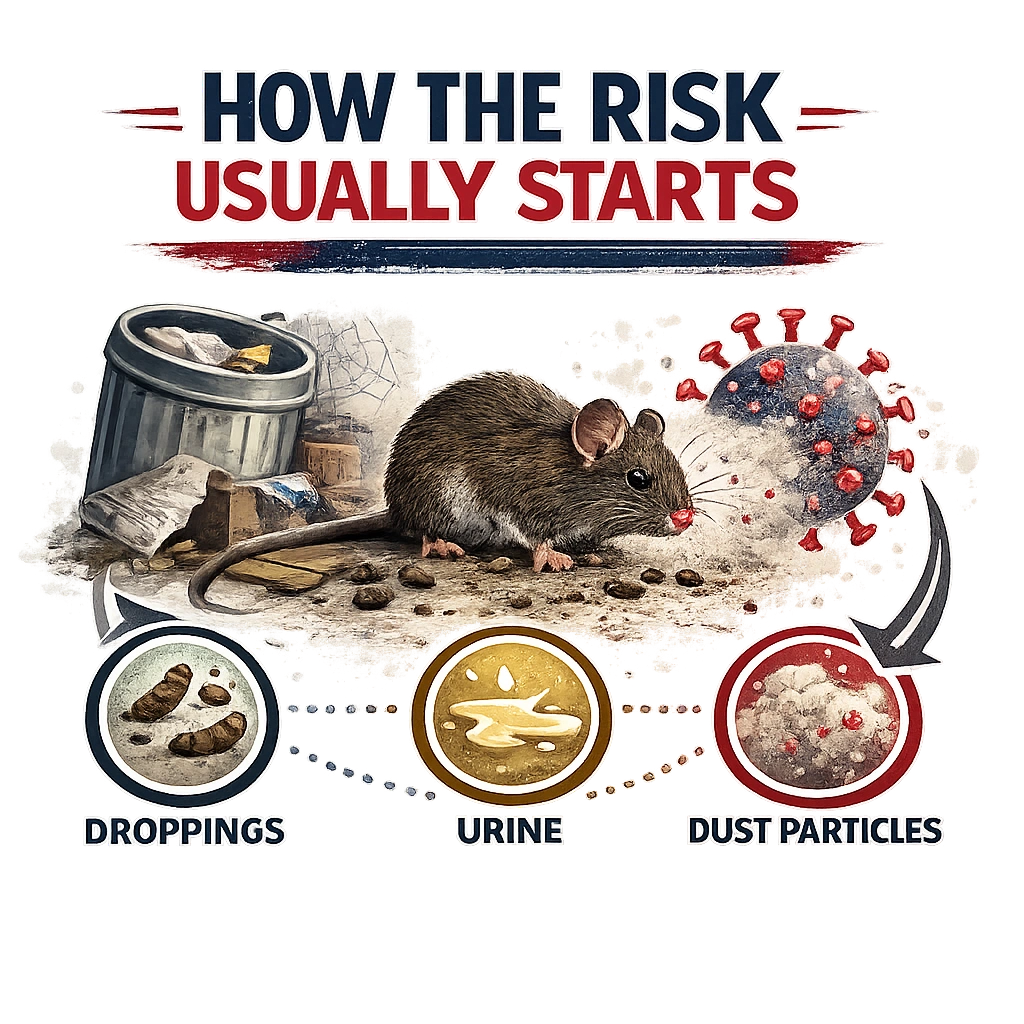
The official spelling is usually hantavirus, one word. People often type it as two words, and that is fine. The basic idea is this: some rodents can carry hantaviruses, and people may be exposed when dried urine, droppings, saliva, or nesting material get disturbed and tiny contaminated particles end up in the air.
That last part matters. It is usually not about seeing one mouse run across the fence. It is about dusty spaces where rodents have been living, and what happens when someone starts cleaning in a hurry.
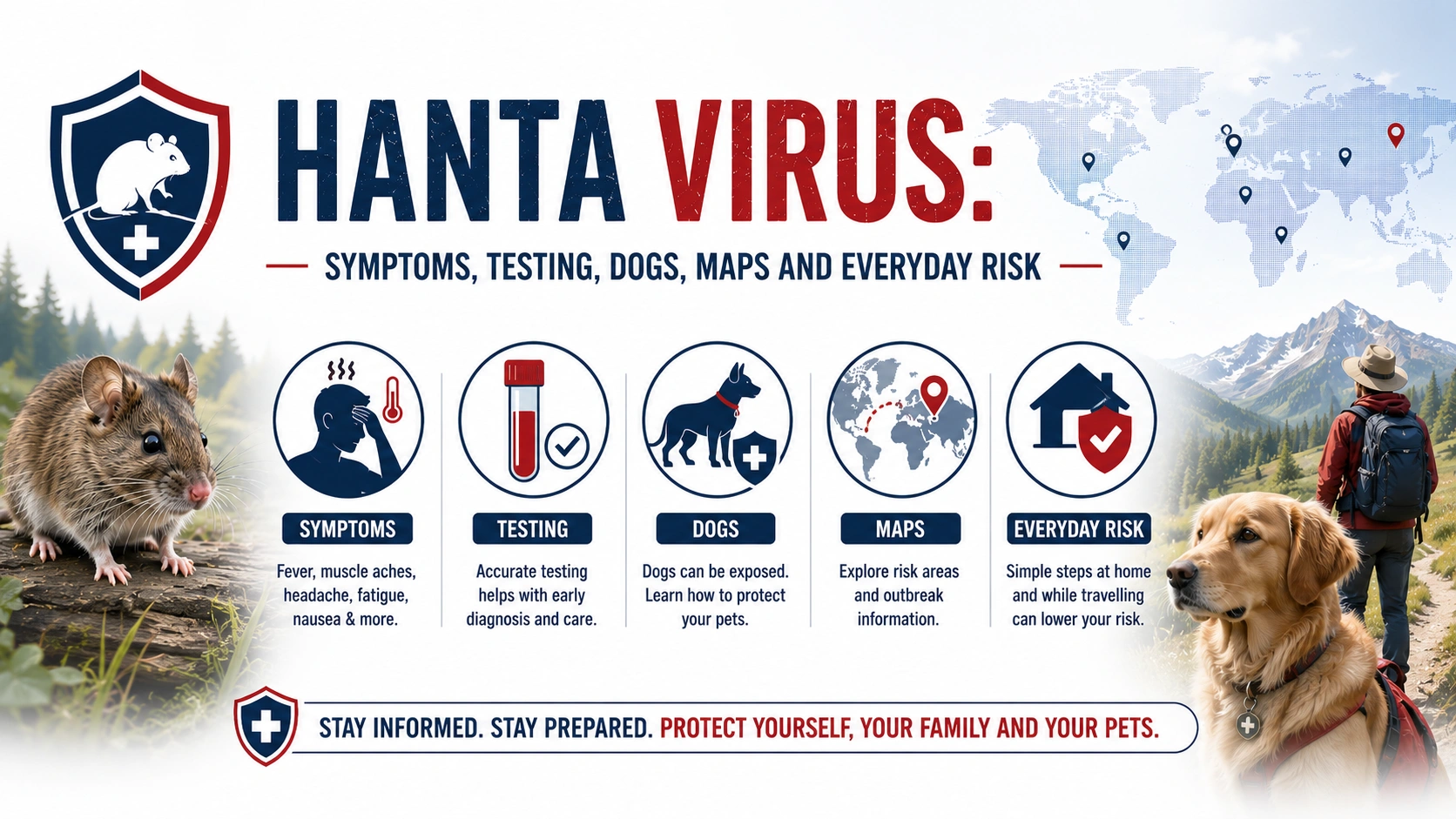
- What Is Hanta Virus?
- How the Risk Usually Starts
- Symptoms of Hanta Virus
- When It Becomes More Serious
- Hanta Virus Test
- Virus Hanta Tratamiento
- Hanta Virus Australia
- Hanta Virus in Dogs
- Hanta Virus Map
- Safe Cleaning Without Stirring Dust
- Lowering the Risk at Home
- When to Call a Doctor
- Final Thoughts
- FAQ
What Is Hanta Virus?
Hantavirus is a rodent-borne virus. There are several types, and they do not all behave in the same way. Some are linked more with kidney illness. Others can affect the lungs. In the Americas, the severe lung illness is usually called hantavirus pulmonary syndrome.
Some readers search for hanta pulmonary virus, but that is more of a search phrase than a medical term. The condition people usually mean is hantavirus pulmonary syndrome, or HPS.
Here is the plain version:
| Question | Straight answer |
|---|---|
| What carries it? | Some infected rodents |
| How can people be exposed? | By breathing dust from contaminated rodent waste |
| Is every mouse a danger? | No |
| Is it common? | No |
| Can it be serious? | Yes, especially if breathing symptoms appear |
| Can you self-treat it? | No, serious symptoms need medical care |
The important thing is proportion. Hantavirus is rare. Most people who see a mouse will not get sick. But rodent-contaminated dust should never be treated like ordinary household dirt.
How the Risk Usually Starts
The risky moment is often boring, which is why people miss it.
A garage is packed with old boxes. A cabin has been closed for winter. A shed smells stale. There are droppings near the wall, maybe a little nesting material tucked behind a shelf. Someone wants the mess gone, so they sweep. Or vacuum. Or shake out an old blanket.
That is where the risk can rise.
Dry rodent waste can break into fine particles. If the material is contaminated and those particles become airborne, breathing them in may create a problem.
More cautious cleaning is needed when you find:
- dry droppings in a closed room;
- nests in boxes, insulation, bedding, or stored fabric;
- dead rodents;
- dust in a poorly ventilated shed, garage, barn, or cabin;
- chewed food bags, pet food, or packaging;
- signs that rodents have been living in the space for a while.
The mistake is not noticing a mouse. The mistake is turning rodent waste into dust.
Symptoms of Hanta Virus
The early symptoms of hanta virus are awkward because they do not announce themselves clearly. They can feel like plenty of ordinary illnesses.
A person may have fever, chills, headache, muscle aches, heavy tiredness, nausea, vomiting, diarrhoea, or stomach pain. Some people simply feel deeply unwell and cannot explain why.
That is not enough to diagnose anything. Fever is common. Headache is common. Stomach trouble is common. The missing piece is the story around it.
Did the symptoms begin after cleaning a shed? After sleeping in a cabin with droppings? After handling a dead rodent? After moving dusty boxes from a garage?
That context matters more than one isolated sign.
People also search for hanta virus symptome, often because they are using a multilingual spelling or copying a phrase from another source. The meaning is the same: they want to know what to watch for.
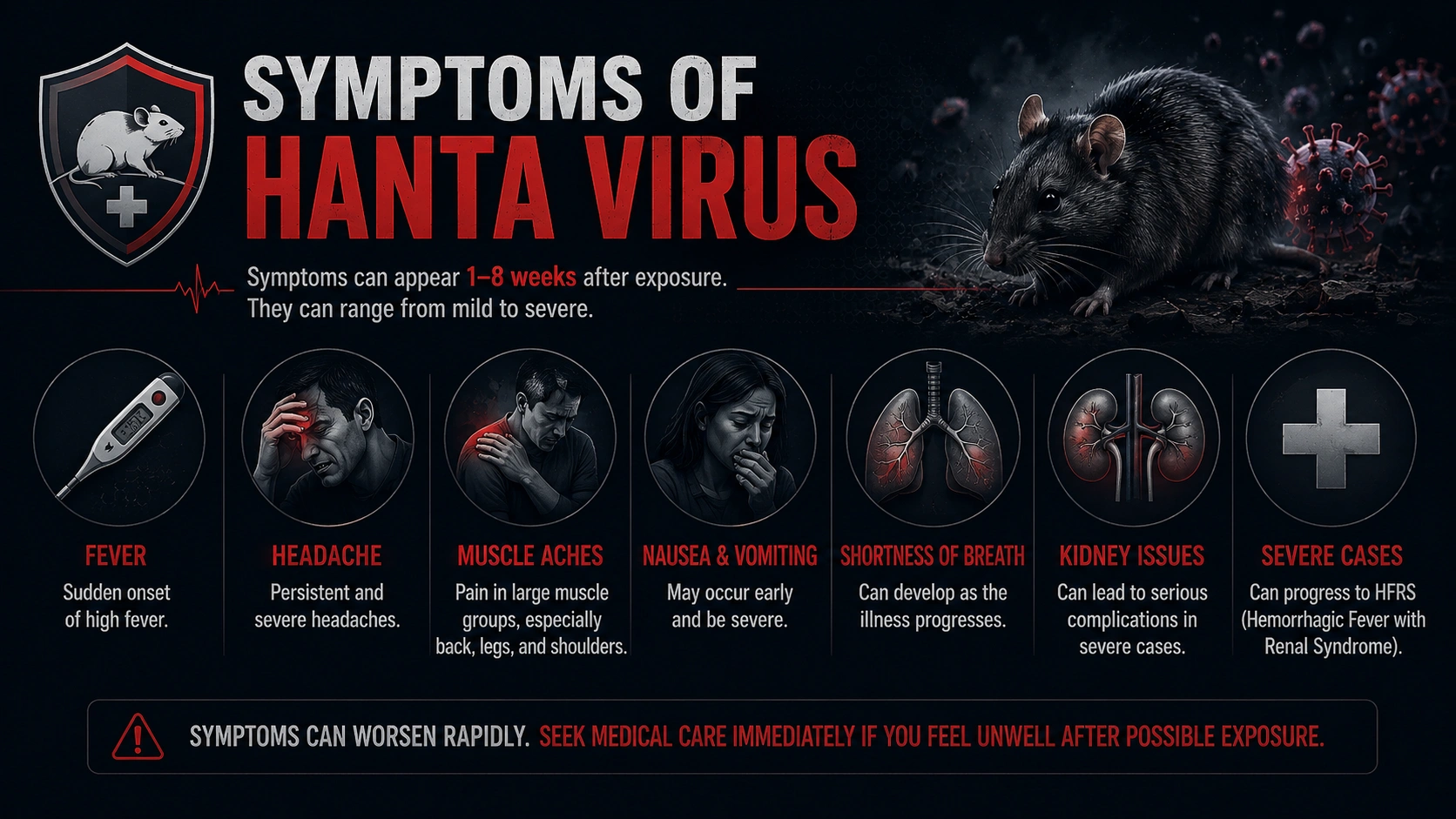
| Possible sign | How it may show up |
|---|---|
| Fever or chills | Feeling hot, cold, shaky, or suddenly unwell |
| Muscle aches | Soreness that feels deeper than normal tiredness |
| Headache | Pain or pressure, often with fever |
| Fatigue | A heavy, drained feeling |
| Nausea or vomiting | Stomach upset that may look like a stomach bug |
| Diarrhoea or belly pain | Digestive symptoms without an obvious cause |
| Shortness of breath | A serious warning sign, especially after earlier illness |
One symptom is not the answer. The pattern is what counts.
When It Becomes More Serious
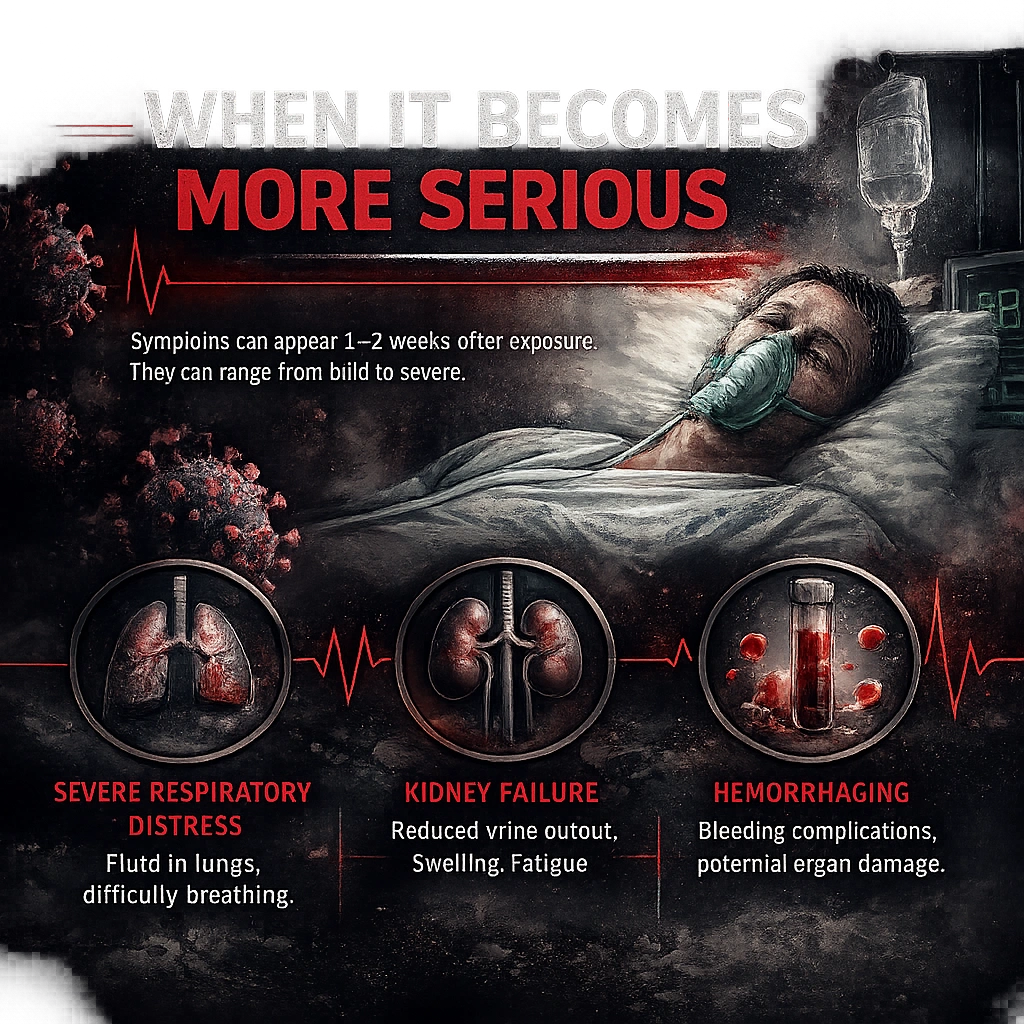
The lung-related form is the one that needs the most attention. It can start with the usual fever-and-aches feeling, then move into coughing, chest tightness, or shortness of breath.
That is not a “see how it feels next week” situation.
If someone feels ill after possible rodent exposure, they should tell medical staff exactly what happened. Not vaguely. Not “I was near some dirt.” Say it plainly:
“I swept mouse droppings in a closed shed.”
“I slept in a cabin where there were droppings near the bed.”
“My dog found a dead rodent, and I cleaned the area afterward.”
Doctors deal with fever and nausea every day. Rodent exposure is the detail that changes the conversation.
Hanta Virus Test
A hanta virus test is not usually a casual home test. In most places, testing is arranged by healthcare providers, hospitals, or public health services.
A doctor will usually think through the full situation first. Symptoms. Timing. Rodent exposure. Travel history. Breathing symptoms. Sometimes kidney-related signs. Depending on the case, lab testing may involve blood tests for antibodies or molecular testing.
For someone with no symptoms, testing often does not add much. Anxiety after seeing droppings is understandable, but anxiety is not the same as illness. Safe cleaning and symptom awareness are usually more useful than trying to test too early or without medical guidance.
If symptoms appear after possible exposure, do not try to solve it with search results. Speak to a healthcare provider and give the full exposure story.
Virus Hanta Tratamiento
Virus hanta tratamiento means hantavirus treatment in Spanish. It is a practical search. People want to know whether there is a medicine, a home cure, or something they should take right away.
The answer is not especially comforting, but it is clear: there is no simple home cure.
Treatment is supportive. That means medical staff treat what the body needs at the time. In a serious case, that may include oxygen, breathing support, fluids, monitoring, and hospital care. Some patients need intensive care.
This is why waiting too long is a bad idea when breathing symptoms appear. Early medical attention gives doctors more room to help. Late panic is harder.
Hanta Virus Australia
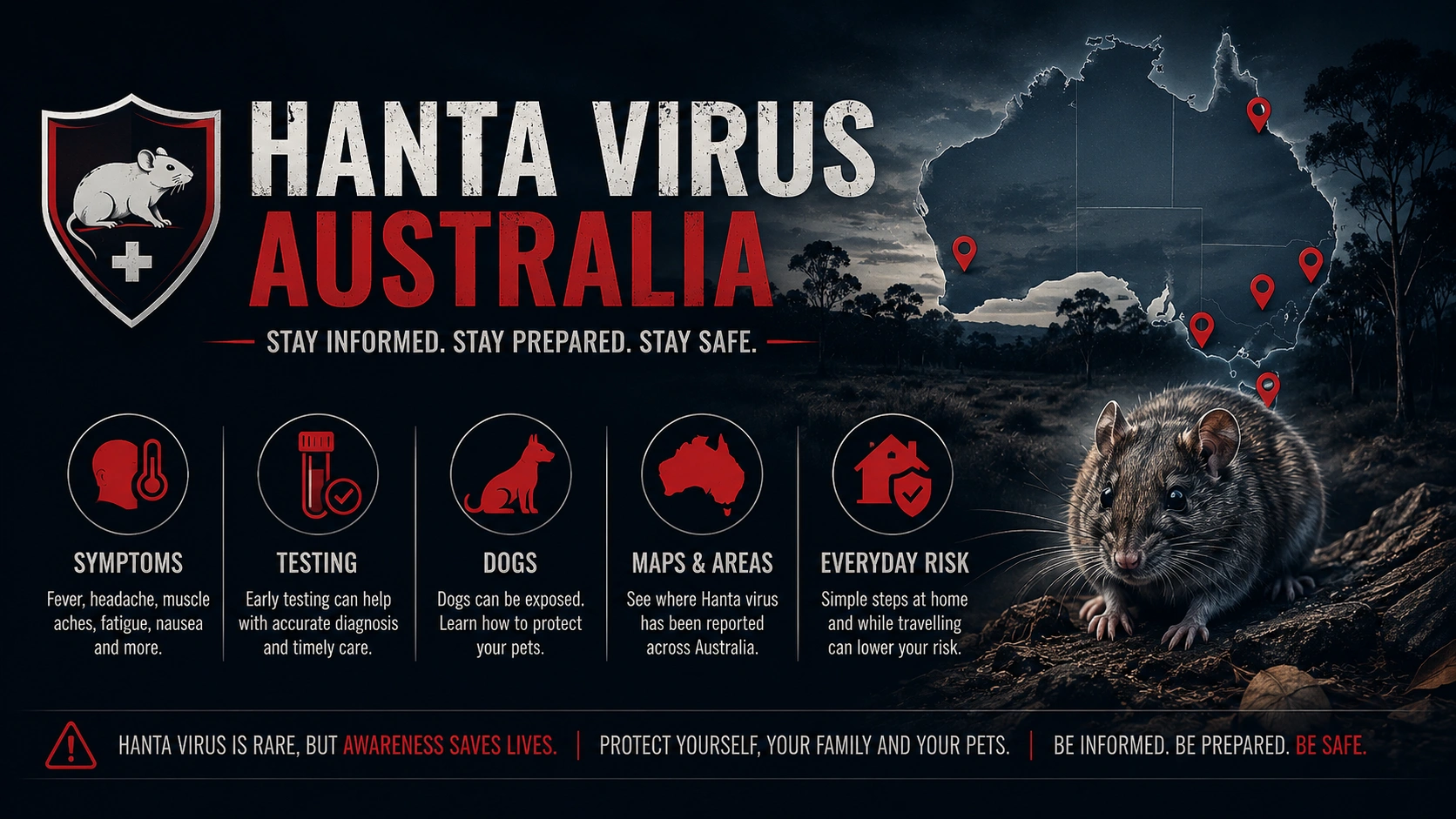
Searches for hanta virus australia usually come from two places: people worried about rodents at home, or people following recent international health news.
For everyday life in Australia, the risk is generally described as very low. Australia has not had the same pattern of confirmed human hantavirus disease seen in some other regions. Still, safe rodent cleanup is sensible anywhere. Droppings, nests, and dusty enclosed spaces are not something to sweep casually.
For travellers, the answer can be different. If someone has returned from a place or event linked with hantavirus and later feels unwell, they should mention both the travel and possible rodent exposure to medical staff.
So the practical message is balanced. In Australia, do not panic. But if you find rodent contamination, clean it properly.
Hanta Virus in Dogs
The search hanta virus in dogs is common because dogs get into everything.
They sniff dead things. They dig under sheds. They find nests. They run into dirty corners before you even notice there is a problem.
The reassuring part: dogs are not usually treated as the main source of human hantavirus infection. The main risk is still infected rodents and contaminated spaces. A dog may, however, show you where rodent activity is happening. It may drag a dead mouse closer to the house. It may walk through dusty bedding or disturb a nest.
That is enough reason to be careful.
Do not let dogs play with dead rodents. Keep them away from droppings and nests. Store pet food in sealed containers because loose food attracts mice and rats. If a dog has been in a dirty shed or crawl space, avoid shaking dusty bedding indoors.
If the dog seems sick after contact with rodents, call a vet. For human health, focus on the environment: droppings, dust, nests, and cleanup.
Hanta Virus Map
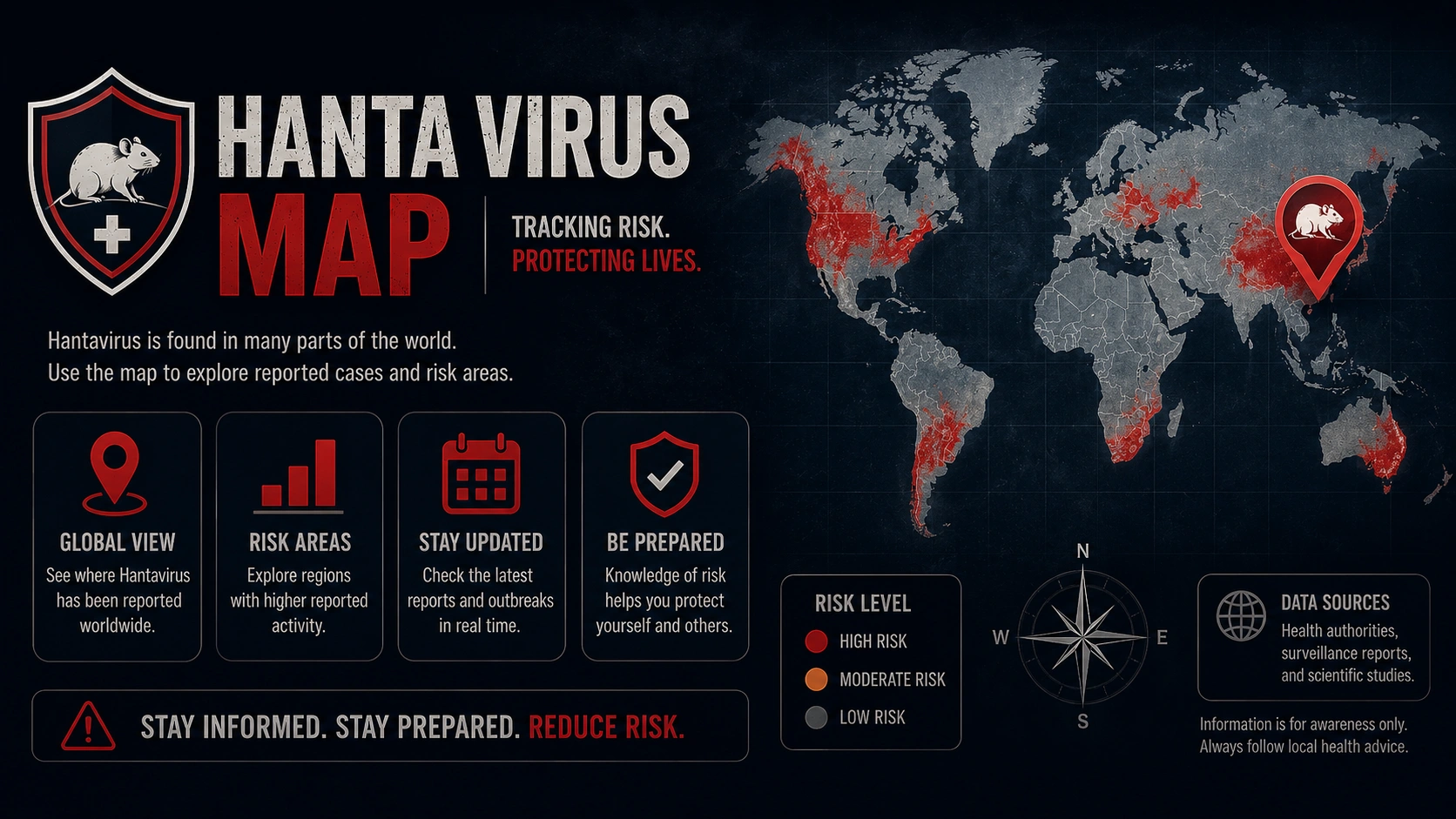
A hanta virus map sounds more definite than it really is.
A map may show reported cases, outbreak regions, or areas where carrier rodents live. That can be useful. It can also make people overconfident or unnecessarily scared.
A marked region does not mean every building is unsafe. An unmarked region does not mean every shed is clean. The real question is not only “What does the map say?” It is “What does this space look like?”
Look at the room, cabin, garage, or kennel in front of you. Are there droppings? Chewed bags? Nests? Dead rodents? Dusty corners? Poor airflow? If yes, treat the space carefully.
A map gives background. It does not clean the floor for you.
Safe Cleaning Without Stirring Dust
This part matters more than most people think.
The first instinct is to remove the mess fast. Grab a broom. Grab the vacuum. Get it done. That may be fine for ordinary dirt. It is not the right approach for rodent waste.
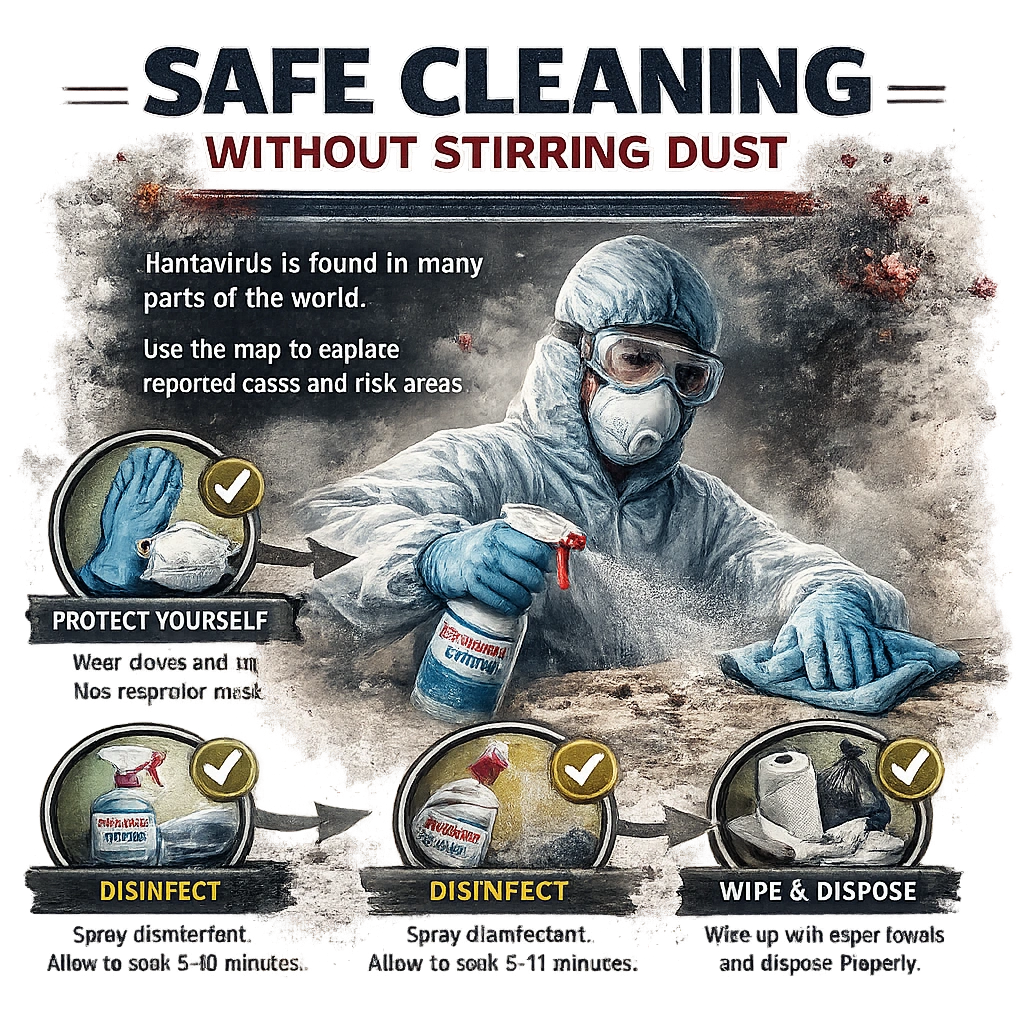
Use a slower method:
- Open doors or windows and let the area air out if possible.
- Wear disposable gloves.
- Do not sweep or vacuum dry droppings.
- Wet droppings, nests, and nearby surfaces with disinfectant.
- Let the area stay wet long enough for the product to work.
- Pick up waste with paper towels.
- Seal it in a bag.
- Clean the surrounding surfaces again.
- Wash your hands well after removing gloves.
If the mess is large, if there are dead rodents, or if insulation is contaminated, it may be better to bring in professional help. There is no prize for doing a risky cleanup yourself.
Lowering the Risk at Home
Prevention is mostly unglamorous work: sealing, storing, clearing, checking.
Rodents come indoors for food, warmth, shelter, and nesting material. Make those harder to find. Seal gaps around doors, pipes, walls, vents, foundations, and rooflines. Keep food, pet food, and bird seed in strong containers. Cover rubbish. Clear clutter in garages and sheds. Move firewood away from living areas.
Before using a cabin or storage building that has been closed for a while, open it first. Let fresh air in. Look before you touch. Do not shake dusty bedding. Do not sweep corners dry.
It is a small delay. It can matter.
When to Call a Doctor
Seeing one mouse is not a reason to rush to hospital. Feeling sick after possible exposure is different.
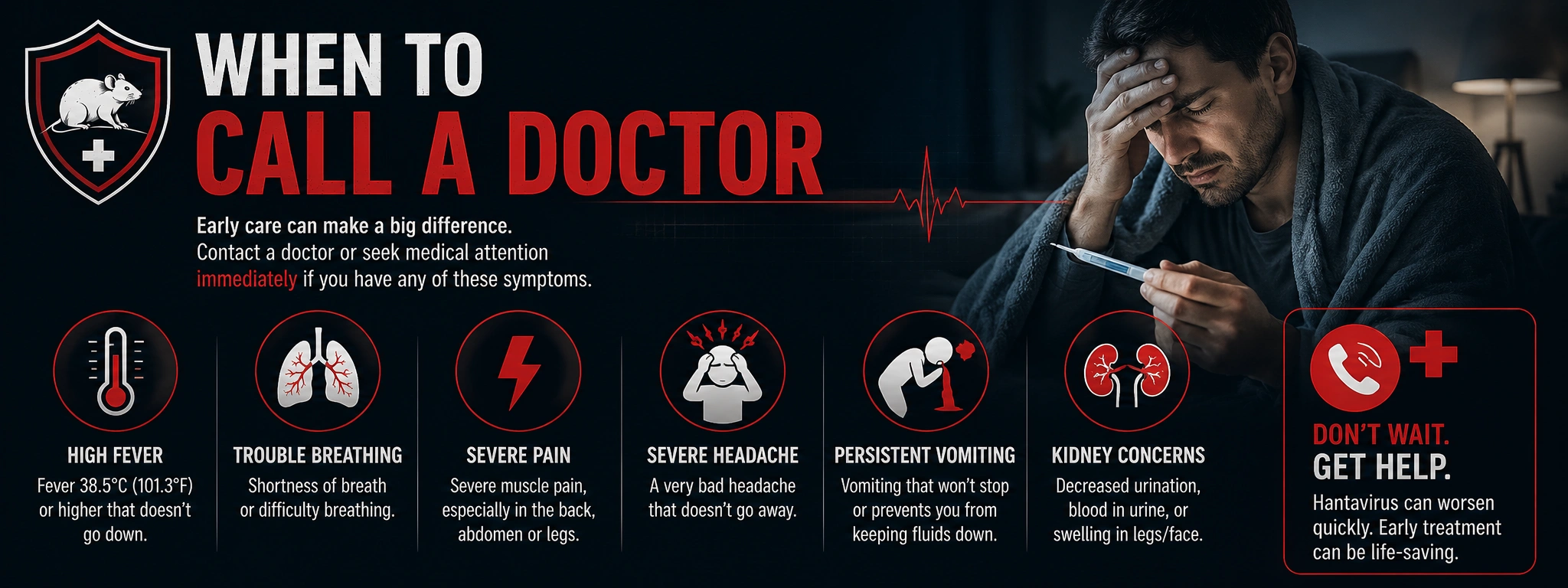
Call a healthcare provider if fever, strong tiredness, muscle aches, headache, dizziness, nausea, vomiting, diarrhoea, or stomach pain begins after cleaning or entering a rodent-contaminated space.
Seek urgent care if shortness of breath, chest tightness, worsening cough, or trouble breathing appears.
When you speak to medical staff, give the facts. Where were you? When did it happen? Were there droppings, nests, or dead rodents? Did you sweep or vacuum? Did a dog find something? Did you travel recently?
Clear details help more than dramatic guesses.
Final Thoughts
Hantavirus is not a reason to fear every mouse. It is a reason to be sensible around rodent contamination.
Most people will never become ill from it. Most small encounters with mice do not lead to disease. The real risk sits in a narrower set of circumstances: dry waste, enclosed spaces, poor airflow, disturbed dust, and symptoms afterward.
So if you open a shed and see droppings, pause. Do not sweep. Do not vacuum. Ventilate, wet the area, wear gloves, and clean with care.
That quiet pause is often the most useful safety step.
FAQ
What is hanta virus?
Hanta virus is a common spelling for hantavirus. It is a group of viruses carried by some rodents. People may be exposed through contaminated droppings, urine, saliva, nesting material, or dust.
What are the symptoms of hanta virus?
Early symptoms may include fever, chills, muscle aches, headache, tiredness, dizziness, nausea, vomiting, diarrhoea, and stomach pain. Breathing problems are more serious.
What does hanta virus symptome mean?
It usually means hantavirus symptoms. People use this spelling when searching for fever, fatigue, muscle pain, stomach upset, and breathing warning signs.
Is hanta pulmonary virus the right term?
People use the phrase online, but the usual medical term is hantavirus pulmonary syndrome. It refers to the severe lung-related form of the illness.
Can dogs get or spread hanta virus?
Dogs are not usually considered the main source of human infection. The bigger risk is infected rodents and contaminated spaces. Keep dogs away from dead rodents, nests, and droppings.
What does a hanta virus map show?
It may show reported cases, outbreak regions, or areas where carrier rodents live. It is useful for awareness, but it cannot judge one specific building.
Is hanta virus australia a major concern?
For everyday life in Australia, the risk is generally considered very low. People with overseas exposure or symptoms after rodent contact should still seek medical advice